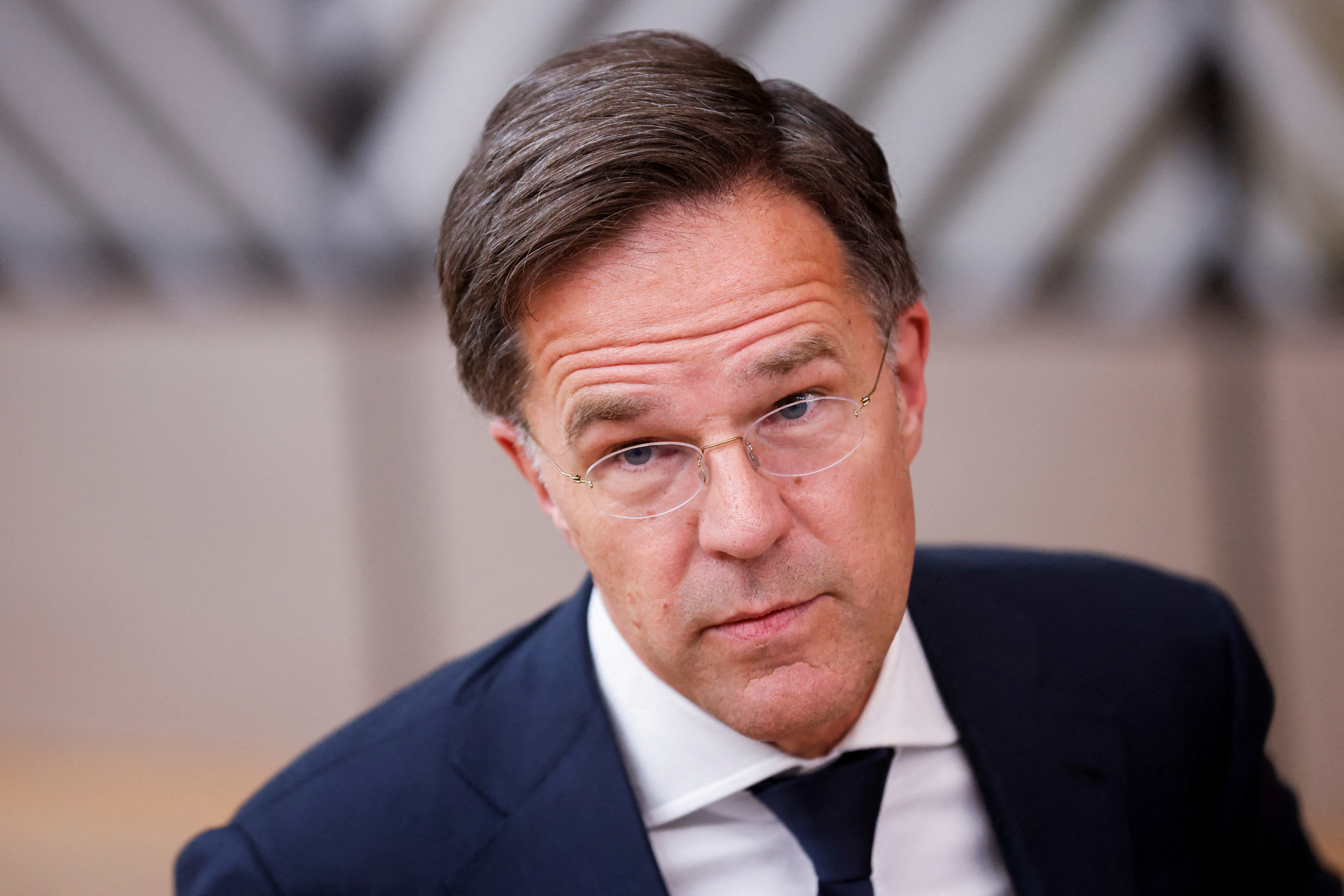
Dutch Prime Minister Mark Rutte attends a European Union leaders informal summit in Brussels, Belgium June 17, 2024. REUTERS/Johanna Geron/File Photo SummaryDutch ex-premier takes over from Jens StoltenbergRutte is staunch supporter of UkraineHe has told Europeans to ‘stop whining’ about TrumpRutte charged with forging consensus among 32 alliesBRUSSELS, Oct 1 (Reuters) – Former Dutch Prime Minister Mark Rutte takes over as NATO boss on Tuesday, charged with holding the Western military alliance together with the war in Ukraine at a critical moment and a pivotal U.S. presidential election approaching.At a ceremony at NATO headquarters in Brussels, Rutte will take over as secretary general from Jens Stoltenberg of Norway, who has overseen the organisation during a turbulent decade marked above all by Russia’s 2022 invasion of Ukraine.NATO officials and diplomats expect Rutte to maintain Stoltenberg’s priorities at the 32-member alliance – rallying support for Ukraine, pushing NATO countries to spend more on defence and keeping the U.S. engaged in European security.But uncertainty hangs over both the conflict in Ukraine, which has turned into a grinding war of attrition, and future U.S. support for NATO and Kyiv, with NATO-sceptic Donald Trump in a close electoral contest with Vice President Kamala Harris.Rutte, who stepped down as Dutch premier this year after a record 14 years in the job, has been a staunch supporter of Ukraine. He has also urged Europeans to “stop whining” about former U.S. President Trump and get on with boosting the continent’s defences.CENTRAL ROLEThe war in Ukraine has put NATO – founded in 1949 to deter and defend against any attack on Western Europe by the Soviet Union – back at the centre of international affairs.Sweden and Finland abandoned long traditions of non-alignment to join NATO’s ranks and benefit from its collective defence clause, under which an attack on one member is considered an attack on all.The war also prompted NATO to send thousands more troops to its eastern flank and to radically revamp its defence plans to take the possibility of an attack from Moscow more seriously than at any point since the end of the Cold War.While Western leaders stress NATO is a defensive alliance, Moscow has long portrayed it as a threat to Russia’s security.One of Rutte’s key tasks will be to persuade NATO members to come up with the extra troops, weapons and spending to fully realise the new defence plans, diplomats and analysts say.The United States is NATO’s predominant power, but the alliance takes decisions by consensus so a big part of the secretary general’s job is forging compromises among the allies.Diplomats say Rutte’s long experience of running coalition governments makes him well-suited to the new role.But they say he may have to curb an occasional tendency to bluntly criticise other European countries and an insistence on fiscal frugality that has annoyed Eastern Europeans, who want joint European Union borrowing for defence projects.Reporting by Andrew Gray; Editing by Jamie FreedOur Standards: The Thomson Reuters Trust Principles.Andrew Gray is Reuters’ European Affairs Editor. Based in Brussels, he covers NATO and the European Union and leads a pan-European team of reporters focused on diplomacy, defence and security. A journalist for almost 30 years, he has previously been based in the UK, Germany, Geneva, the Balkans, West Africa and Washington, where he reported on the Pentagon. He covered the Iraq war in 2003 and contributed a chapter to a Reuters book on the conflict. He has also worked at Politico Europe as a senior editor and podcast host, served as the main editor for a fellowship programme for journalists from the Balkans, and contributed to the BBC’s From Our Own Correspondent radio show.

 English